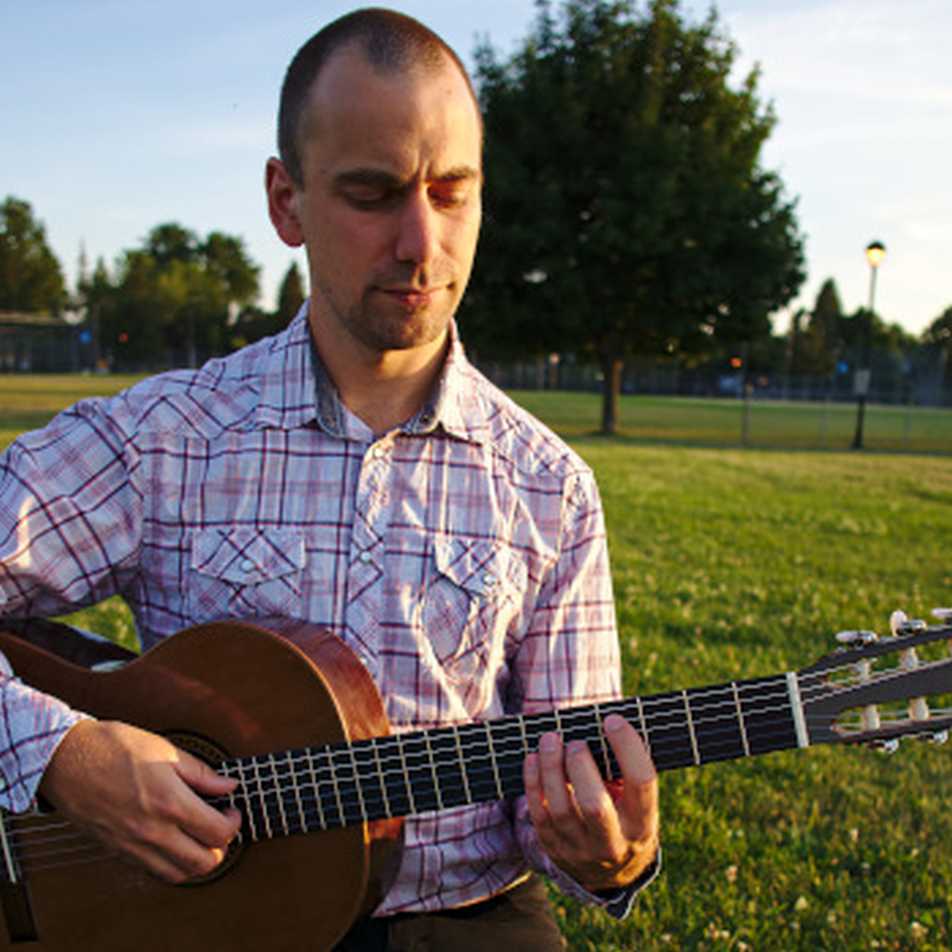
Discover these top sonatas for classical guitar.
If you love classical music, you have doubtless come across the sonata, which is a form of music consisting of three or four movements played consecutively. Many sonatas for piano have become staples of the classical repertoire, such as the Moonlight Sonata by Beethoven, titled by the composer as Piano Sonata No. 14 in C-sharp minor.
As you can see, the name given by the composer to a sonata can be somewhat boring; a prime example being Sonata Number 3 by Manuel Ponce for classical guitar which we will discover shortly.
Unfortunately, during the 19th century when composers began to write serious music for the classical guitar, true multi-movement sonatas for this instrument were few and hard to come by. But luckily, some composers of this period did write complete guitar sonatas, and increasingly composers began to embrace this multi-movement form for the guitar.
Let's discover the top 7 sonatas for the classical guitar in chronological order of publication.
Sonata in C Major by Mauro Giuliani
Known by almost all Classical guitarists, the Sonata in C Major Op. 15 for guitar is a masterpiece in the 19th century bel canto style. Written in three movements following the traditional Fast-Slow-Fast structure, this piece may not be the most challenging or difficult to play for classical guitarists.
Indeed, Giuliani's music is sometimes overlooked for being too simplistic. Published in 1808, the first movement of the Sonata in C Major contains the indication Allegro Spirituoso, and begins with a simple Alberti bass played in the middle register which accompanies a somewhat plain melody.
But therein lies the challenge, and the beauty of the piece. Because the first movement does not commence with a dark, dramatic opening like many guitar sonatas, it can be challenging to cleanly execute the beginning of the work using the correct balance.
So, although the work lacks the complex texture found in the works of Romantic or contemporary composers, the challenges and beauty found in the Sonata Op. 15 by Giuliani is a testament to this Italian composer's expertise with larger forms to create effective classical guitar music.
Grande Sonate Op. 25 by Fernando Sor
Although only three opus numbers separate them, the first Grande sonate Op. 22 by Fernando Sor was published five years before the second sonata for guitar, in 1822 and 1827 respectively. Although both works showcase the mature use of melody and elaborate accompaniment, it is the second grande sonate Op.25 that takes the cake in terms of melodic and harmonic maturity.
Although his first works burst with youthful energy and stunning displays of virtuosity in intricate passages, I find them somewhat lacking when placed in contrast with his more mature works.
The second grande sonate opens with dramatic chords in C minor, with the wistful second theme appearing in relative key of E flat major. These rare keys on the guitar allow for the open third string (G) to shine in ways where it's normally a subdued or muted string.
Unfortunately, perhaps due to his disenchantment with larger or more complicated guitar works, Sor did not create any guitar sonatas after writing his second Grande Sonate Op. 25.
Guitar Sonata in C Minor by Nicolò Paganini
While more well-known by classical aficonados as a showy, virtuoso violinist, the Italian composer wrote several sonatas for guitar, as well as works for guitar and violin, containing only two to three movements.
Not published during Paganini's lifetime (1782-1840); the guitar sonatas in MS 84 were first catalogued in the 1982 Catalogo Tematico delle musiche di Niccolò Paganini. These works were likely composed in the early 19th century, at the same time that Paganini wrote his other works for guitar quartet.
Short in duration (a performance of the composition lasts for less than 4 minutes), the writing is nonetheless skillfully adapted for the guitar, with harmonies implied rather than fully written out (as a non-guitarist would do).
Guitar Sonata in A Major by Anton Diabelli
One of the few guitar composers to bridge the gap between the piano and the guitar, the composer Anton Diabelli is well known outside of guitar circles by all classical musicians. This is doubtless owing to Diabelli, a popular composer at the time, prevailing upon major composers to create variations to his waltz.
The rest is, as they say, history, as his little ditty became enshrined in Beethoven's work, 33 Variations on a waltz by Anton Diabelli, commonly known as the Diabelli variations and hailed by music lovers and musicologists alike as the greatest set of variations written for piano since Bach.
But we are not here to discuss keyboards, so getting back to the guitar, we must remember that Franz Schubert, who was said to strum the guitar, unfortunately wrote almost nothing for the guitar. He must, however, have been intimately familiar with the guitar, because the Arpeggione sonata is beautifully written and the chords and melody are easily playable by any competent guitarist.
Luckily, Anton Diabelli did write a few very effective works for guitar which represent the classical period of the 19th century, including three sonatas for guitar Op. 29 in the keys of C, A and F major.
Confusingly, the work called Sonata in A by Julian Bream is in fact a compilation of two of the three sonatas. Bream's arrangement is a transposed version of the first two movements of the third sonata in F major up a major third. This moves the music into arguably a better key to play in the guitar, which is A major. Then Bream added the remaining two movements of the second sonata to create his new, derivative work.
Sonata III by Manuel Ponce
According to guitar virtuoso Andres Segovia, the guitar repertoire of the 19th century contained a serious problem of quantity over quality, and he was determined to fix that through persuading his contemporaries to write more music for the guitar.
The result was a fruitful mix of a non-guitarist composer (Ponce), one of the first truly great Mexican composers, with a Spanish virtuoso guitarist who was more than happy to commission his works, albeit with somewhat capricious fingering. Thus, we have the Sonata Clasica and Sonata Romantica, two very conservative works with harmonic thinking straight out of the 1800's.
I could never fully appreciate these two sonatas for guitar, as it feels to me that while writing these works, Ponce never quite loosened his necktie long enough to let the more emotional passages through.
Quite different is the Sonata III, composed in 1927 before the appearance of the Sonata Clasica and written during the composer's stay in Paris. While somewhat boringly named, this work written for guitar entirely in Drop D tuning sounds absolutely brilliant in my opinion. Finally, perhaps owing to the influence of Paul Dukas, the melody floats freely throughout the keys and the dramatic first chords suit the guitar perfectly.
The Sonata III bridges the gap between more modern works and tonality, as well as showcasing his maturity as a composer. While still having a recognizeable theme, the harmonic language and folksy beauty of the slow middle movement are testaments to Manuel Ponce's brilliance.
Sonata para guitarra by Antonio José
Before he was summarily executed by soldiers (a fate that similarly befell the Austrian composer Anton Webern) Spanish composer Antonio José Martínez Palacios composed a rather good guitar sonata. Hailed as the next Spanish composer by Maurice Ravel, José wrote his sonata in 1933, just three years before his untimely death in Northwestern Spain at the end of summer in 1936.
Largely forgotten by his contemporaries, the guitar sonata is, deservedly, becoming more popular and appearing more often in performances. It's a good representative of the turn of the century style in guitar music, which is rather rare and hard to find. Indeed, music by Tarrega composed just a few decades earlier sounds centuries apart by comparison.
When practicing this sonata by Antonio José, you will notice the difficulty of playing works by non-guitarists. Most obvious for me lies in the awkward transition between rapid single notes followed by a complete five- or six-string chord that appears suddenly and must be played at full volume.
Guitar Sonata by Brett Vachon
The impetus behind writing a sonata came when I first heard the sonatas for piano written by the old masters, such as Beethoven or Brahms. However this work is more contemporary than the works by the Grand Masters and has modern 20th century harmonies and dissonances. The Sonata for guitar by Brett Vachon was completed in 2012 and was my first work where I wrote a four movement work for one instrument.
The first movement of the Guitar Sonata is a conversation between two contrasting elements: one more staccato and the other more lyrical. The second movement, or slow movement starts off with a gentle rocking back-and-forth exchange followed by a more tumultuous climax containing arpeggios and descending scales.
The third and fourth movements are more upbeat and bring the sonata to a triumphant end. This work was recorded at Braeburn Studio in Wellington, New Zealand in 2012.